

Processor pipeline
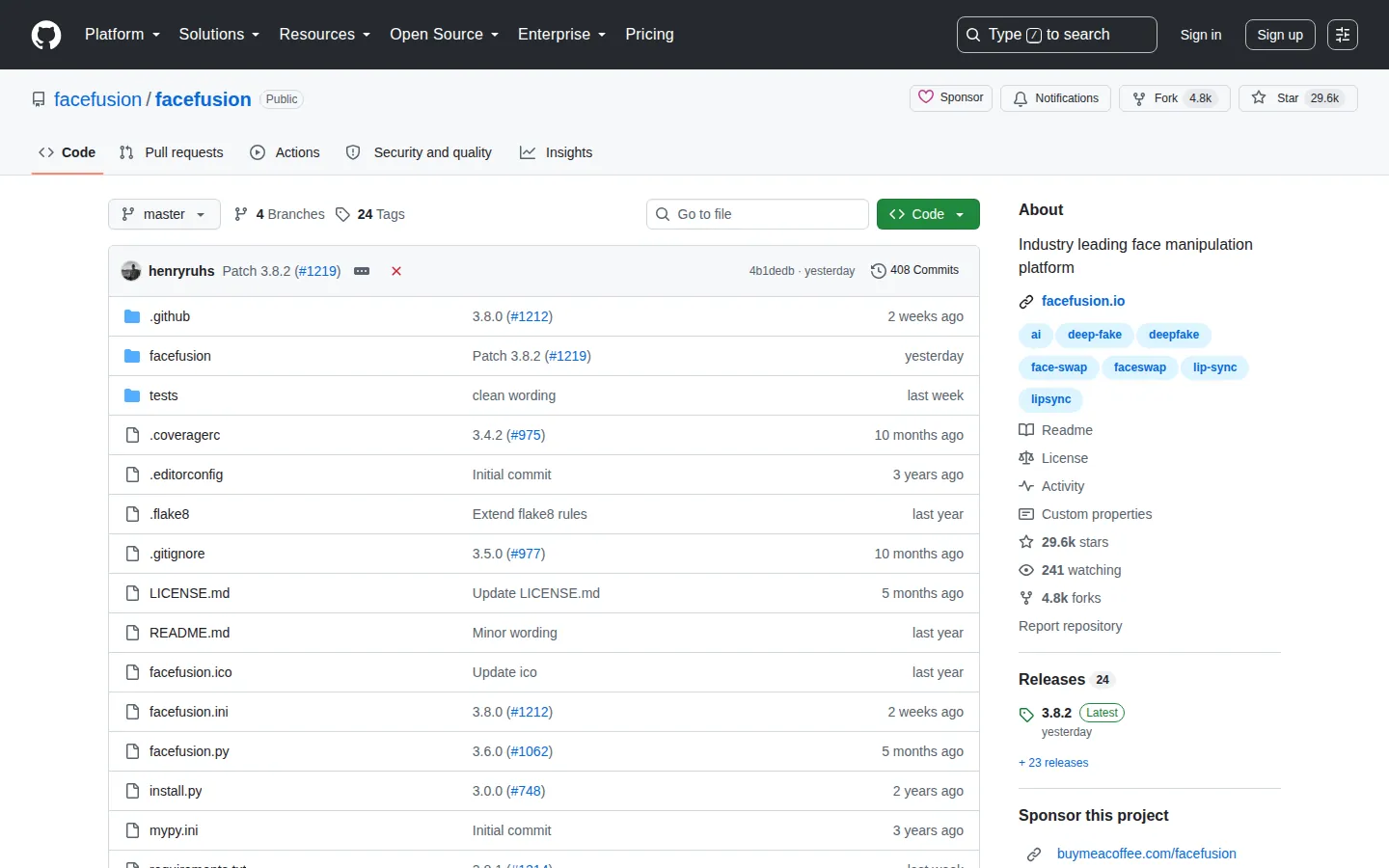
FaceFusion can chain a face swapper with processors for enhancement, expression restoration, editing, age modification, colorization, frame enhancement and lip sync. A job queue records steps and can remix or retry work. This is a processing pipeline, not a text-to-image model: it transforms supplied media and selected faces rather than inventing an entire scene from a prompt.
Installation and acceleration
The official instructions use a local Python environment and offer different ONNX Runtime accelerator paths. Hardware support and model speed vary by operating system, execution provider, resolution and video length. Temporary resources are stored in an operating-system temporary location according to the FAQ, so local privacy reviews should include caches and output folders, not only the final export.
Face selection and output limits
Face analysis and selection determine which detected identity is changed. Occlusion, profile angles, motion blur, lighting shifts and low resolution can cause identity drift or artifacts across frames. Enhancement can make an output look cleaner without restoring authentic detail, and a technically convincing swap remains synthetic media.
Consent boundary
Face swapping an identifiable person into intimate material without permission is non-consensual synthetic imagery. The capability should be used only with adult subjects who have explicitly agreed to the transformation or with fully synthetic characters. Readers should apply the Database's likeness-consent standard and disclose synthetic output where viewers could reasonably mistake it for a real recording.
Technical context
FaceFusion processes image and video frames through face and lip-sync stages; this dossier provides temporal context without inferring its model internals.