
What these tools produce
An AI clothing-removal or “undress” tool does not reveal a hidden body. It synthesizes pixels that were not present in the source, commonly through inpainting, image-to-image transformation, segmentation, or related generative techniques. The result is fabricated synthetic media, not evidence of the depicted person's appearance.
A hosted service such as Undress.ws or NudeAI.fun packages an editing workflow behind a web interface. A local tool such as ComfyUI or InvokeAI can support general mask-based clothing edits with compatible models. Capabilities, policies, and data paths are not interchangeable.
Consent is the first pass-or-fail test
Do not use a real person's image to create sexualized or intimate output without that adult's specific, informed agreement. Do not target private individuals, public figures, or anyone whose age or consent is uncertain.
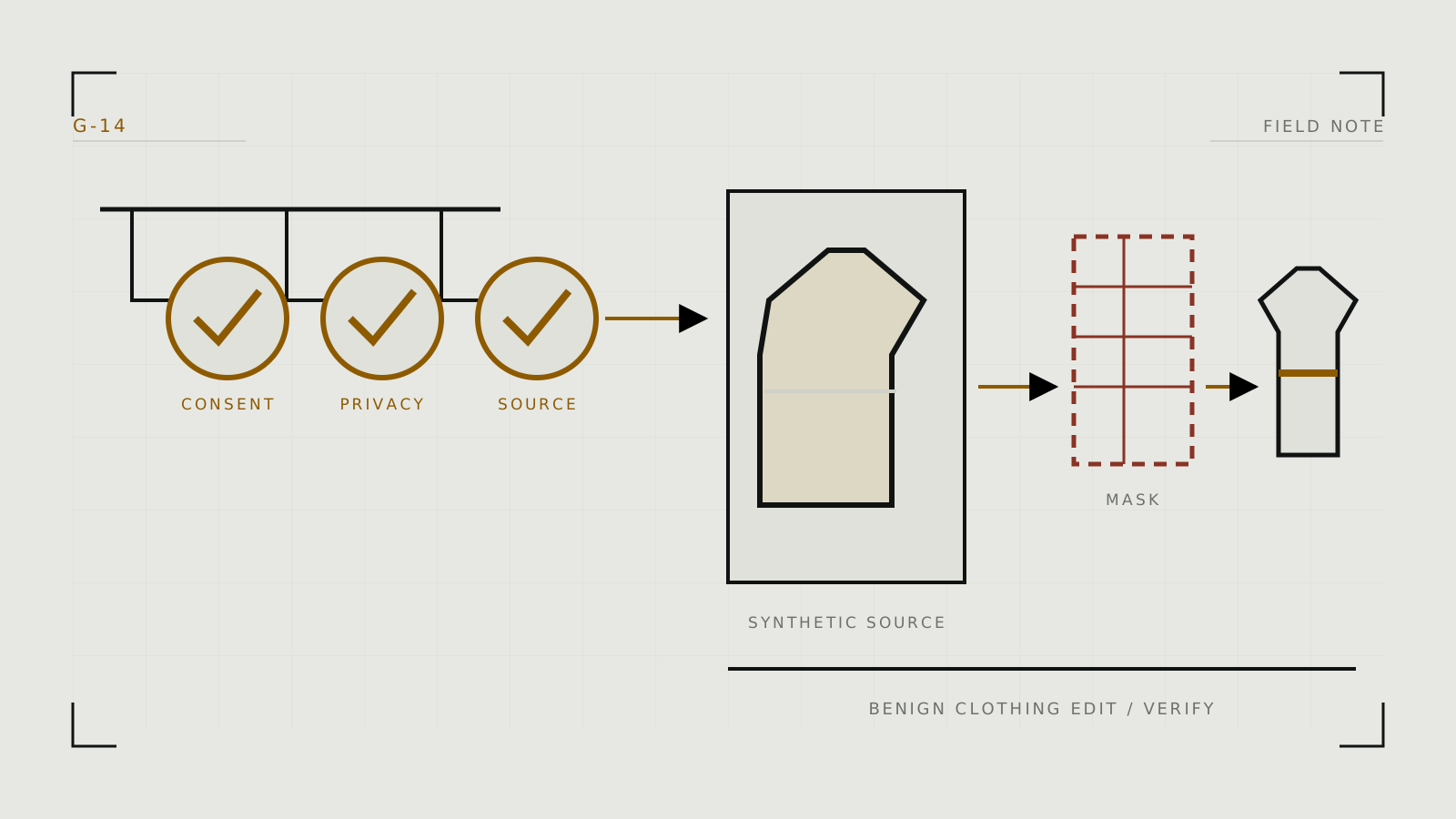
Acceptable test material is a clearly adult synthetic character, your own image, or an adult subject who agreed to this exact transformation, storage method, and sharing plan. A general photo release or permission to post the original does not necessarily cover intimate synthetic derivatives. Read likeness consent.
If the tool's marketing encourages non-consensual targeting, celebrity impersonation, or safeguard evasion, reject it. Do not test whether its protections can be defeated.
Evaluate the service before supplying an image
- Identity and documentation: Does it provide usable terms, privacy policy, acceptable-use rules, and support contacts?
- Retention and deletion: Are inputs, outputs, logs, derived data, and backups covered by specific statements?
- Training and review: Can uploads be used to improve models or viewed by moderators, staff, or vendors?
- Visibility: Are outputs private by default, and are community galleries opt-in?
- Consent controls: Does policy clearly prohibit non-consensual intimate imagery and provide a reporting/removal path?
- Payment and account risk: Are recurring billing, cancellation, credit expiry, and account deletion explained?
- Technical transparency: Does it distinguish generation from factual reconstruction and disclose material limits?
Missing answers are not neutral. Use the upload-privacy guide to trace the data path.
Run a legitimate synthetic-character test
- Create a non-identifiable synthetic adult source. Do not use a real face for a convenience test.
- Use a simple composition. Clear body boundaries, ordinary lighting, and limited occlusion reveal the basic editing quality.
- Inspect boundaries. Look for altered identity, broken hands, distorted background, inconsistent lighting, seams, and invented anatomy.
- Check output handling. Confirm whether the test appeared in history, a gallery, cloud storage, or an undeletable project.
- Delete the test. Exercise the product's deletion controls before trusting them with anything more sensitive.
The goal is to evaluate the tool's documented, consensual workflow, not to learn techniques for targeting a real person.
Hosted versus local clothing editing
Hosted tools reduce setup but require transmission to a provider and acceptance of its policy, retention, and enforcement. Local inpainting offers more direct control over masks, checkpoints, and storage, but the user must secure the machine, vet model files and extensions, and prevent accidental sharing. Local processing does not change the consent requirement.
For a legitimate clothing replacement (changing one synthetic outfit to another) general inpainting is often clearer and more controllable than a one-click undress label. Mask only the garment region, describe the replacement, and preserve the rest of the synthetic character. This is ordinary editing guidance for fictional or consented material, not a method for producing non-consensual intimate imagery.
Understand harm and reporting limits
Non-consensual sexualized edits can be a form of image-based abuse even though the pixels are fabricated. Deepfake and face-swap techniques can amplify the same identity harm. Provenance labels and watermarks may help communicate that media is synthetic, but they do not create consent or guarantee that copies remain labeled.
Prefer services with a clear reporting and removal process. NIST's synthetic-content risk work explicitly includes prevention of non-consensual intimate imagery; current FTC guidance in the United States also addresses removal processes for covered platforms. Requirements vary by jurisdiction, so verify current local rules when legal consequences matter.